What Handel Heard: The Soprano Voice and the Resurrection
There is a moment, just before you sing "I Know That My Redeemer Liveth," when the orchestra gives you four quiet measures and you have to decide something.
Not a technical decision. Not about breath or placement or any of the machinery that keeps a soprano functioning on a concert stage. You have to decide whether you actually believe what you are about to say.
Because Handel didn't write this aria for a voice in general. He wrote it for a particular kind of voice making a particular kind of claim. The text draws from two sources that have no obvious reason to sit beside each other: Job 19, where a man in the middle of unimaginable suffering declares that his Redeemer lives and will one day stand upon the earth, and 1 Corinthians 15, where Paul insists that Christ's resurrection is the foundation everything else rests on. Handel placed them in sequence and handed them to a soprano. That is the decision those four opening measures are asking you to make.
I have sung this aria more times than I can count. That decision never gets easier.
What Handel understood, I think, is that the soprano voice occupies a specific spiritual register. I don't mean that as a metaphor. I mean it almost literally: the voice sits above the full texture of the ensemble, above the chorus that has just finished the Hallelujah, above the full weight of everything Part II of the Messiah carried — the suffering, the crucifixion, the burial. All of that is behind the audience when Part III begins. And then a single soprano walks into the silence and opens her mouth.
The aria begins on an ascending fourth. Four notes, rising. On the words I know. Not "I believe." Not "I hope." I know. That interval is not an accident. Handel was one of the most deliberate composers who ever lived, and he understood that the soprano voice reaching upward at the moment of declaration is doing something no other instrument can replicate. It is a human body insisting on something it cannot prove. The ascending fourth is an act of faith rendered in sound.
When the text arrives at "For now is Christ risen," the melody rises more than an octave. You feel it happening in your body before the audience registers it in the room. You are climbing the same way the text is climbing, past the comfortable range, past what speech could carry, into the territory only singing can reach. There is a reason sacred music, across practically every tradition I have performed in, pushes the voice upward when it needs to say something about God. We are reaching toward something our hands cannot hold.
I want to say something about this aria that I think gets overlooked.
It is not a triumphant piece.
People assume it must be, given where it sits, right after the Hallelujah Chorus, right at the opening of the resurrection narrative. But "I Know That My Redeemer Liveth" is marked Larghetto. Slowly. With restraint. The declaration of resurrection in Handel's telling does not arrive on a wave of orchestral power. It comes in quietly, on one voice, almost alone.
I think about that every time I prepare for an Easter performance. The Black church tradition I grew up in knows what Easter Sunday sounds like at full volume, and there is genuine truth in that joy. I have lived inside it my whole life. But the Larghetto holds a different truth, the soprano who stands alone and says I know as though she is telling you something she has carried quietly for a long time. I have learned, across many years of singing sacred music, that the most powerful moments do not always belong to the loudest ones.
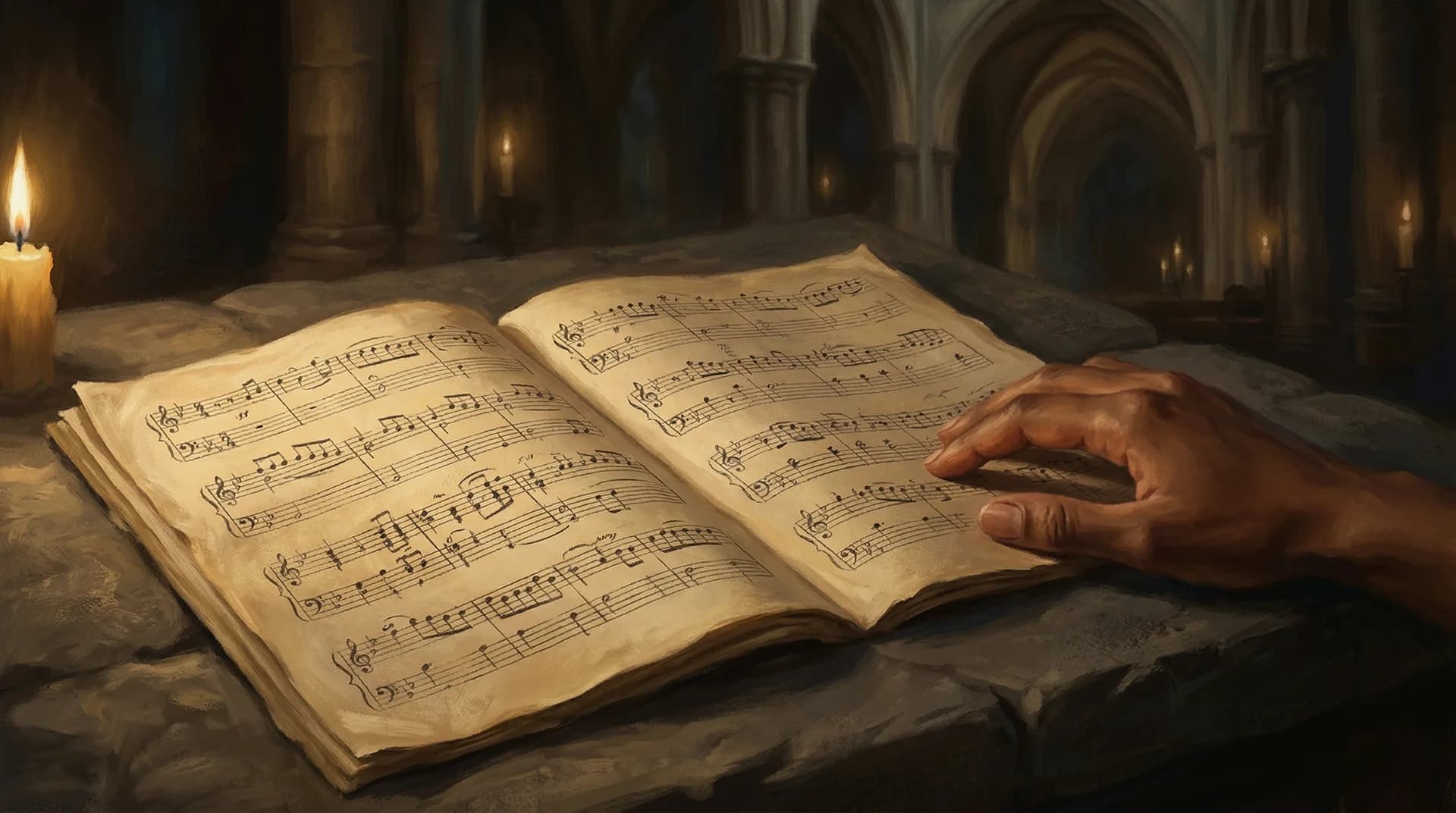
Handel died on Good Saturday, April 14, 1759, eight days after conducting the Messiah for the last time. The statue at Westminster Abbey that marks where he is buried shows him holding the manuscript for one aria. Not the Hallelujah Chorus, which is what most people can hum from memory. He is holding "I Know That My Redeemer Liveth."
I find that detail very hard to move past. This man, complicated and gifted and by all accounts not easy to know, chose to be remembered at the entrance to his grave by the moment in his greatest work when one voice rises alone and says I know.
Whatever his private faith was, he understood something true about this music. The years of preparation matter. The technical foundation, built over a lifetime of study, matters. But at the moment the note leaves the body and enters the room, it becomes something that training alone did not make.
Every Easter, I stand in that moment. The orchestra gives me those four measures. I make my decision.
And then I open my mouth, and I reach for the ascending fourth, and I say what I know.